Hunan Chengyuan Electrical CO.,LTD

-
Product Center
 National tollfree hotline
 -
BlogWe Are Not Professional Media Reports, But What We Want To Say Is Here
 National tollfree hotline
 -
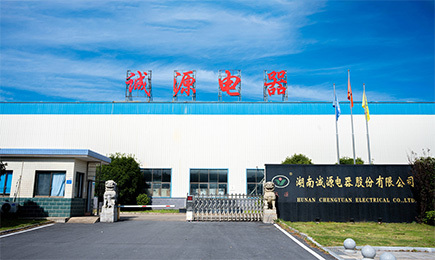
About UsHunan Chengyuan Electrical CO.,LTD stock code 872783 was founded in 1999, is a photovoltaic new energygeneration, energy storage, charging integrated system solutions
 National tollfree hotline
Advantages and disadvantages of commonly used sheet metal materials in power distribution equipment
Release time:
2025-04-28
Author:
Source:
Abstract
Advantages and disadvantages of commonly used sheet metal materials in power distribution equipment:
Cold-rolled steel sheet (SPCC)
- Advantages:
- Low cost and easy to process and form.
- Smooth surface, suitable for subsequent surface treatments such as painting and electroplating.
- Disadvantages:
- Not corrosion-resistant, prone to rust in humid environments.
- Requires additional protective treatment to prevent oxidation.
Galvanized steel sheet (SECC/SGCC)
- SECC (Electrogalvanized steel sheet)
- Advantages:
- Good corrosion resistance and decorative appearance.
- Easy to process, with mechanical properties similar to cold-rolled steel sheets.
- Disadvantages:
- N material is more expensive without surface treatment; P material may increase cost when used for spraying.
- Surface defects may occur during the galvanizing process.
- Advantages:
- SGCC (Hot-dip galvanized steel sheet)
- Advantages:
- Strong corrosion resistance, thick zinc layer, good protection effect.
- Disadvantages:
- Harder than SECC, lower ductility, not suitable for deep drawing design.
- The thick zinc layer affects the welding quality and has poor electric welding performance.
- Advantages:
Stainless steel (such as SUS304)
- Advantages:
- Excellent corrosion resistance, not easy to rust.
- Beautiful and durable, no additional surface treatment is required.
- Also performs well at high temperatures.
- Disadvantages:
- Relatively high material cost.
- Difficult to process, especially cutting and bending operations.
Aluminum and aluminum alloy sheets
- Advantages:
- Light weight, easy to handle and install.
- Strong corrosion resistance, especially suitable for outdoor environments.
- Good conductivity, suitable for electrical applications.
- Disadvantages:
- Relatively low strength and hardness, may soften especially in high-temperature environments.
- For some applications requiring high strength, alloying is needed to improve its performance.
Each material has its specific application scenarios. For example, for indoor power distribution boxes, cold-rolled steel sheets or galvanized steel sheets may be a suitable choice because of their cost-effectiveness; while in situations requiring long-term exposure to outdoors or harsh environments, stainless steel or aluminum is more suitable. The selection of appropriate materials requires comprehensive consideration of factors such as cost, durability, and ease of processing.
Recommended Reading
Chengyuan Electric and Siemens join forces to create a better future!
2024-10-29
How to choose suitable box-type substations and cable branch boxes
2023-12-25
The role of cable junction boxes in automated control systems.
2023-12-15

Room 504, Building 8, Xincheng Science and Technology Park, 588 Yuelu West Avenue, Changsha High tech Development Zone, Hunan Province, China