Hunan Chengyuan Electrical CO.,LTD

-
Product Center
 National tollfree hotline
 -
BlogWe Are Not Professional Media Reports, But What We Want To Say Is Here
 National tollfree hotline
 -
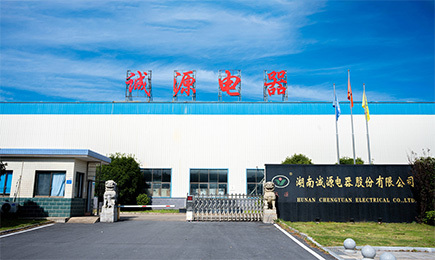
About UsHunan Chengyuan Electrical CO.,LTD stock code 872783 was founded in 1999, is a photovoltaic new energygeneration, energy storage, charging integrated system solutions
 National tollfree hotline
What is a DC power system?
Release time:
2025-06-12
Author:
Source:
Abstract
A power DC system is an independent power supply system that provides a stable and reliable DC power supply for critical equipment in the power system. It typically consists of a battery bank, charging equipment, and a DC switchboard (distribution unit), and can continue to supply power through the battery when the AC power is interrupted, ensuring the safe operation of the power system. The core content is as follows:
1. Core Function of the Power DC System
- Independent power supply: Unaffected by generators, plant power, or system operating modes, ensuring power supply even during AC power outages.
- Critical equipment power supply: Provides DC power for relay protection, automatic devices, circuit breaker operation, emergency lighting, and emergency power supplies.
- Backup power support: Provides continuous power in emergencies through a battery bank (such as valve-regulated sealed lead-acid batteries).
2. Main Components
- Battery bank:
- Core energy storage device, usually composed of multiple 2V or 12V batteries connected in series (such as 110V or 220V systems).
- Common types: Valve-regulated sealed maintenance-free lead-acid batteries.
- Charging equipment:
- Includes rectifier modules (converting AC to DC), chargers, etc., to charge the batteries and maintain their power.
- Usually equipped with a main charger and a backup charger to ensure redundancy.
- DC switchboard (distribution unit):
- Integrates rectifier modules, monitoring systems, insulation monitoring, and battery inspection functions.
- Provides DC output distribution and monitors the system operating status (such as voltage, current, and temperature).
3. Typical Application Scenarios of Power DC Systems
- Power plants and substations:
- Provides power for circuit breaker switching operations, relay protection, automatic devices, and signaling systems.
- Large power plants may have multiple independent DC systems (such as unit control rooms, step-up substation DC systems).
- Industrial field:
- Control systems and emergency power supplies in petrochemical, steel, and electrified railway industries.
- Communication and data centers:
- Provides stable DC power for communication equipment, computer rooms, and UPS (uninterruptible power supplies).
- Emergency scenarios:
- Emergency lighting and emergency equipment power supply for hospitals, mines, and high-rise buildings.
4. Key Features of Power DC Systems
- High reliability:
- When the AC power is interrupted, the battery can seamlessly switch to power supply, ensuring the operation of critical equipment.
- Redundant design (such as dual chargers, multiple battery banks) is used to improve system stability.
- Independence:
- Does not rely on the external power grid, avoiding power outages caused by AC system failures.
- Maintenance requirements:
- Regularly check the battery capacity, voltage, and charger status to ensure long-term reliability.
5. Typical Configuration Examples of Power DC Systems
- 110V DC system:
- Provides power for relay protection, control operations, and signaling equipment; each unit usually has two independent systems.
- 220V DC system:
- Provides power for high-power DC loads such as emergency oil pumps, UPS, and emergency lighting; the load is small during normal operation and large during emergencies.
6. Difference from High-Voltage DC Transmission
Power DC systems mainly refer to low-voltage DC power supply systems (such as 110V/220V) in power plants and substations, while High-Voltage DC Transmission (HVDC) is a high-voltage DC system ( ±1000kV and above) used for long-distance and large-capacity power transmission. The two differ significantly in voltage level and application scenarios.
The power DC system is a key infrastructure for ensuring the safe operation of the power system. Its core function is to provide continuous and stable DC power to critical equipment through batteries and charging equipment. It plays an irreplaceable role in power plants, substations, communications, and industrial automation, and is an important part of the power system's "last line of defense".
Recommended Reading
Chengyuan Electric and Siemens join forces to create a better future!
2024-10-29
How to choose suitable box-type substations and cable branch boxes
2023-12-25
The role of cable junction boxes in automated control systems.
2023-12-15

Room 504, Building 8, Xincheng Science and Technology Park, 588 Yuelu West Avenue, Changsha High tech Development Zone, Hunan Province, China