Hunan Chengyuan Electrical CO.,LTD

-
Product Center
 National tollfree hotline
 -
BlogWe Are Not Professional Media Reports, But What We Want To Say Is Here
 National tollfree hotline
 -
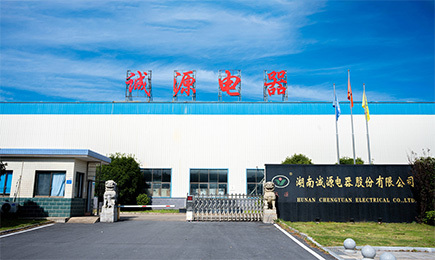
About UsHunan Chengyuan Electrical CO.,LTD stock code 872783 was founded in 1999, is a photovoltaic new energygeneration, energy storage, charging integrated system solutions
 National tollfree hotline
MNS Switchgear: Priority Design for High-Performance Withdrawable Switchgear
Release time:
2025-11-07
Author:
Source:
Abstract
In power distribution systems, switchgear serves as the core equipment for electrical energy distribution and control, and its performance directly impacts the safety and efficiency of the entire power supply system. The MNS-type withdrawable switchgear, with its modular design, high reliability, and excellent environmental adaptability, has become the preferred solution for power distribution in industrial, commercial, and specialized applications. This article will analyze how MNS switchgear achieves technological breakthroughs through prioritized design, focusing on three key aspects: structural innovation, performance advantages, and practical application scenarios.
1. Modular Structure: The Perfect Fusion of Flexibility and Standardization
The MNS switchgear features a C-channel steel frame with a 25mm modular design, enabling rapid assembly through standardized components. Its core structure is divided into a horizontal busbar chamber, drawer compartment, and cable room, with each functional area physically isolated by flame-retardant plastic panels—effectively preventing the spread of arc faults. For instance, the flame-retardant panel separating the main busbar chamber from the electrical equipment room can withstand a short-time withstand current of up to 100 kA, ensuring the safety of personnel and equipment in the event of a fault.
The drawer-unit design is another major innovation of MNS. Available in five standard sizes ranging from 8E/4 to 24E, it supports flexible mixed configurations. For instance, in a certain data center project, a single cabinet integrated 36 1/4-size drawers (8E/4 specification), enabling precise power management for server clusters while reducing the footprint by 45% compared to conventional fixed switchgear cabinets. Each drawer features a four-position mechanical interlock system (Connect/Test/Separate/Remove), and once the operating handle is locked into place, an additional padlock can be added to prevent accidental operation and potential safety hazards.
II. Performance Breakthrough: A Dual Upgrade of High Load Capacity and Intelligent Capabilities
1. Electrical performance leads the industry
The MNS main busbar features a rated current of up to 5000A, with a short-time withstand current of 100kA (RMS) and a peak current of 220kA, making it capable of meeting the demands of extreme scenarios such as nuclear power plants. The vertical busbar adopts an L-shaped enclosed channel design, boosting its current-carrying capacity to 900–1600A while effectively handling motor-starting surges. For instance, after a steel enterprise in Shanghai installed MNS switchgear for its rolling mill power supply system, the annual maintenance costs were reduced by 35%, and the failure rate dropped by 82%.
2. Intelligent Integration Capability
MNS supports optional smart trip units, multifunctional meters, and arc-flash protection devices. The smart trip unit provides three-stage protection against overload, short circuit, and ground fault, with a response time of less than 5 ms. Meanwhile, the arc-flash protection system uses fiber-optic sensors to detect arcs, automatically disconnecting the faulty circuit within 0.1 second. Additionally, Modbus RTU or Profinet communication modules enable seamless data integration into SCADA systems, facilitating remote monitoring and fault recording.
3. Environmental Adaptability Optimization
MNS offers protection ratings ranging from IP30 to IP54, tailored for various application scenarios. In offshore platform applications, the cabinets feature a double-layer anti-corrosion coating along with a salt-spray-resistant design. For humid environments, they are equipped with a humidity-sensing trigger mechanism that automatically activates the heating and dehumidification system when relative humidity exceeds 85%. After adopting MNS cabinets with an IP54 protection rating in a chemical project in Shandong, the equipment lifespan was extended to 15 years—tripling the longevity compared to conventional products.
III. Application Scenarios: Comprehensive Coverage from Conventional Power Distribution to Extreme Environments
- Industrial Sector: Balancing Heavy Loads with Capacity Expansion
In heavy industrial settings such as metallurgy and petrochemicals, the MNS achieves mixed installations through its 1/2-drawer design. A steel enterprise replaced its original three fixed GGD cabinets with two MNS cabinets, saving 30% of space while also paving the way for future capacity expansion. Additionally, its 6300A main busbar design can handle the inrush currents generated during large motor startups, with the short-time withstand capability extended up to 3 seconds—perfectly meeting the momentary high-load demands of equipment like rolling mills and electric arc furnaces.
2. Building Electrical Distribution: Precision and Energy Efficiency
Commercial complexes, data centers, and other such environments demand extremely high reliability in power supply. MNS's 1/4-drawer design allows for on-demand capacity expansion, eliminating the need for a complete system replacement. In Shenzhen, a super-tall building has adopted MNS to construct its distribution room, enabling modular management of floor-level power distribution through 36 drawer units. This approach has reduced line losses by 5%–8%, with the initial investment difference recouped within just three years.
3. Special Environments: Customized Solutions
For extreme scenarios such as nuclear power plants and offshore platforms, MNS offers customized designs. For instance, in nuclear power plant applications, the cabinets are crafted from radiation-resistant materials with a double-sealed structure, certified through TTA-type testing. On offshore platforms, rotary filters paired with electric telescopic rods are installed to enhance operational efficiency even in salt-spray environments. Additionally, the 2024 improved patent model features an advanced water-cooling system that circulates heat via serpentine water pipes, ensuring stable cabinet temperatures below 40°C—even in high-temperature conditions exceeding 40°C.
IV. Technological Evolution: From Mechanical Interlocking to Digital Twins
As Industry 4.0 advances, MNS switchgear is evolving from a standalone device toward an intelligent system. The MNS3.0 digital switchgear, launched in 2025, integrates digital twin technology to optimize the cabinet structure and cooling pathways through virtual simulations. For instance, during the renovation of a hospital's power distribution system, the digital twin model predicted the temperature distribution inside the cabinet, guiding precise adjustments.
Recommended Reading
Chengyuan Electric and Siemens join forces to create a better future!
2024-10-29
How to choose suitable box-type substations and cable branch boxes
2023-12-25
The role of cable junction boxes in automated control systems.
2023-12-15

Room 504, Building 8, Xincheng Science and Technology Park, 588 Yuelu West Avenue, Changsha High tech Development Zone, Hunan Province, China